
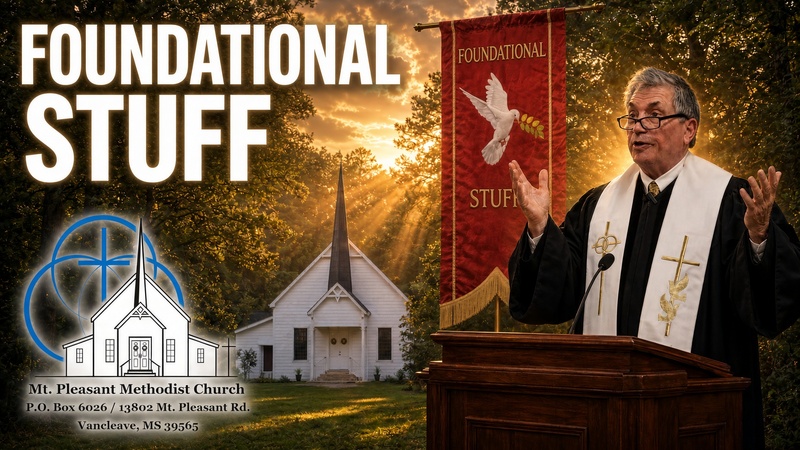
In this message from Mount Pleasant Methodist Church, Rev. Ron McDougald preaches on Jesus’ parable of the vineyard tenants in Matthew 21:33–46 (with Philippians 3:7–11). Set five days before the crucifixion, the story is the one Eugene Peterson called the parable that gets Jesus killed—because the religious leaders knew he was talking about them.
The landowner plants a vineyard, equips it, rents it to tenants, and leaves. When he sends servants to collect his share of the fruit, the tenants beat, stone, and kill them. Finally he sends his son; they throw him out and kill him too, hoping to seize the inheritance. Jesus asks what the owner will do, and the answer is clear: he will bring those tenants to a wretched end and give the vineyard to others who will produce its fruit. The stone the builders rejected becomes the cornerstone.
Rev. McDougald draws out the parable’s claim on everyday faith:
- God owns everything—the earth and the fullness thereof. Houses, money, work, even the small things we treat as ours are held in trust. Early Methodists called church leaders stewards, not owners: people of sound mind who agreed that God is the owner of all.
- The tenants grow impatient when the owner does not return on their schedule. In Jesus’ day an absentee owner might return about every five years; when he does not, the workers begin to treat the vineyard as their own. Two thousand years later, the same impatience shows up when God does not act on our timetable. None of us knows the hour—not even the Son—so the call is not speculation about timing but faithfulness until he comes.
- Longevity, hard work, and religious credentials do not create a share in ownership. The Pharisees traced their claim back through Moses and Abraham and still missed the point. Possessiveness about what already belongs to God puts people under judgment; the kingdom is given to those who produce its fruit.
- The story of an Italian gardener who kept an English garden exactly as the absent owner left it—“until the day that he returns”—frames the invitation. The master does not demand a perfect vineyard. He looks for people who use what he has given—time, resources, energy, and spiritual gifts—for his glory.
During communion the congregation is asked a simple question: knowing what Christ has done, what are you willing to do for him—in this church, through camp meeting, and for the rest of life—until the master returns? The hymn “Take My Life and Let It Be” supplies the language: moments and days consecrated, flowing in ceaseless praise. Buildings, budgets, and staff matter, but the decisive piece is people who tend what belongs to God and present the fruit when he comes.
Scripture: Matthew 21:33–46; Philippians 3:7–11
Mount Pleasant Methodist Church
13802 Mt Pleasant Rd, Vancleave, MS
Website: https://mtpleasantgmc.org/
YouTube: https://www.youtube.com/@MtPleasantGMC
Facebook: https://www.facebook.com/profile.php?id=61561591703590